Inspired by Nature: Dionaea Embroidery in Modern Home Decor
When a Floral Motif Isn’t Soft
Floral design is often associated with softness. Petals, light colors, and organic shapes are typically used to create a sense of calm and ease, which is why they appear so frequently in home decor.
But not every plant works this way.
For this collection, we chose Dionaea (Venus flytrap) —a plant that feels unusual at first glance: structured, reactive, and slightly aggressive. It does not simply exist; it responds, opening and closing while defining its own boundaries.
Bringing this form into embroidery was not about creating contrast for its own sake, but about expanding what a “floral” motif can be.
A botanical form does not have to be soft to be beautiful. Structure can be expressive, precision can be elegant, and strength can exist without losing refinement. This idea sits quietly at the center of the collection: beauty is not limited to a single kind of form.
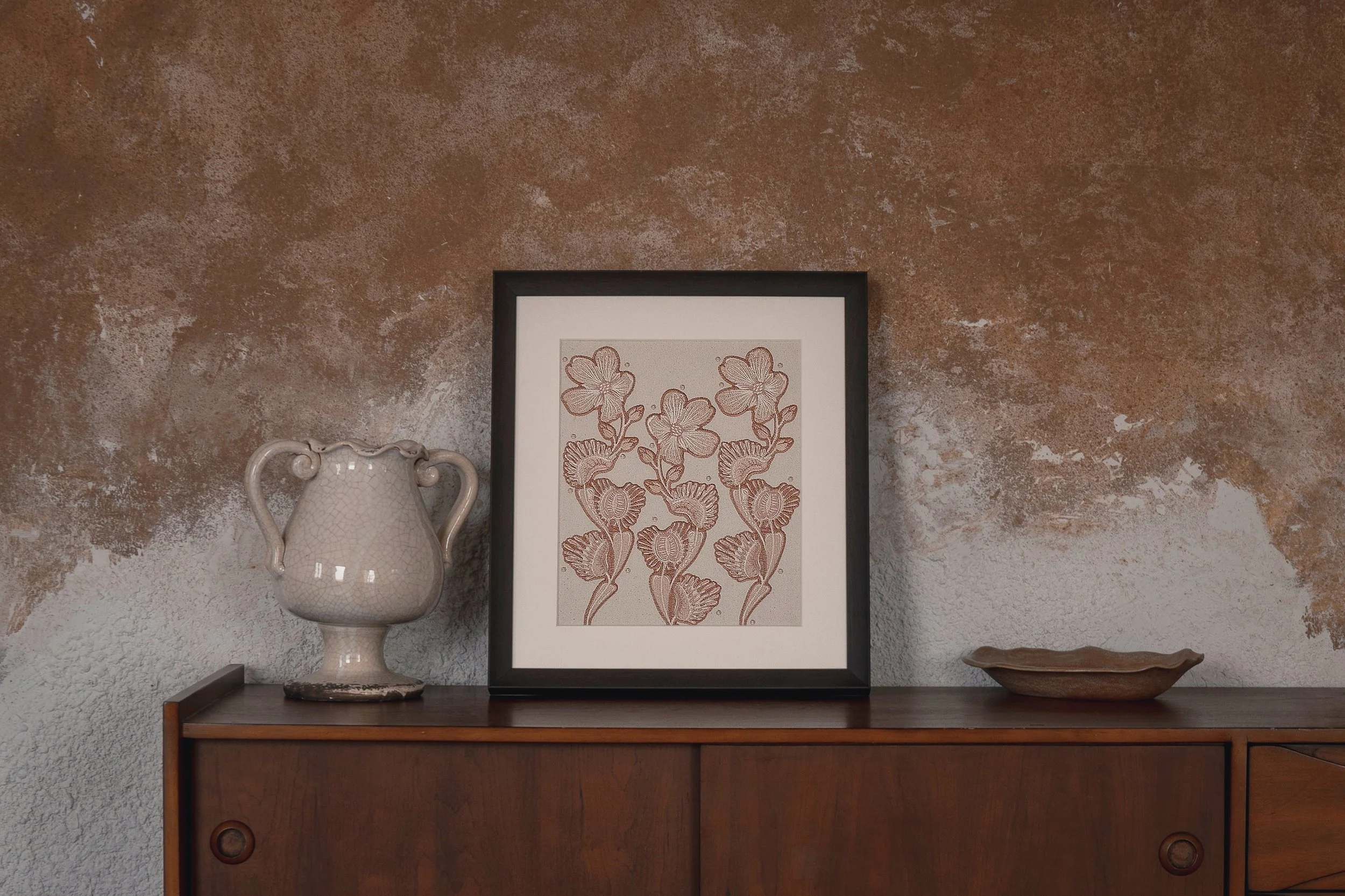
A quieter kind of presence.
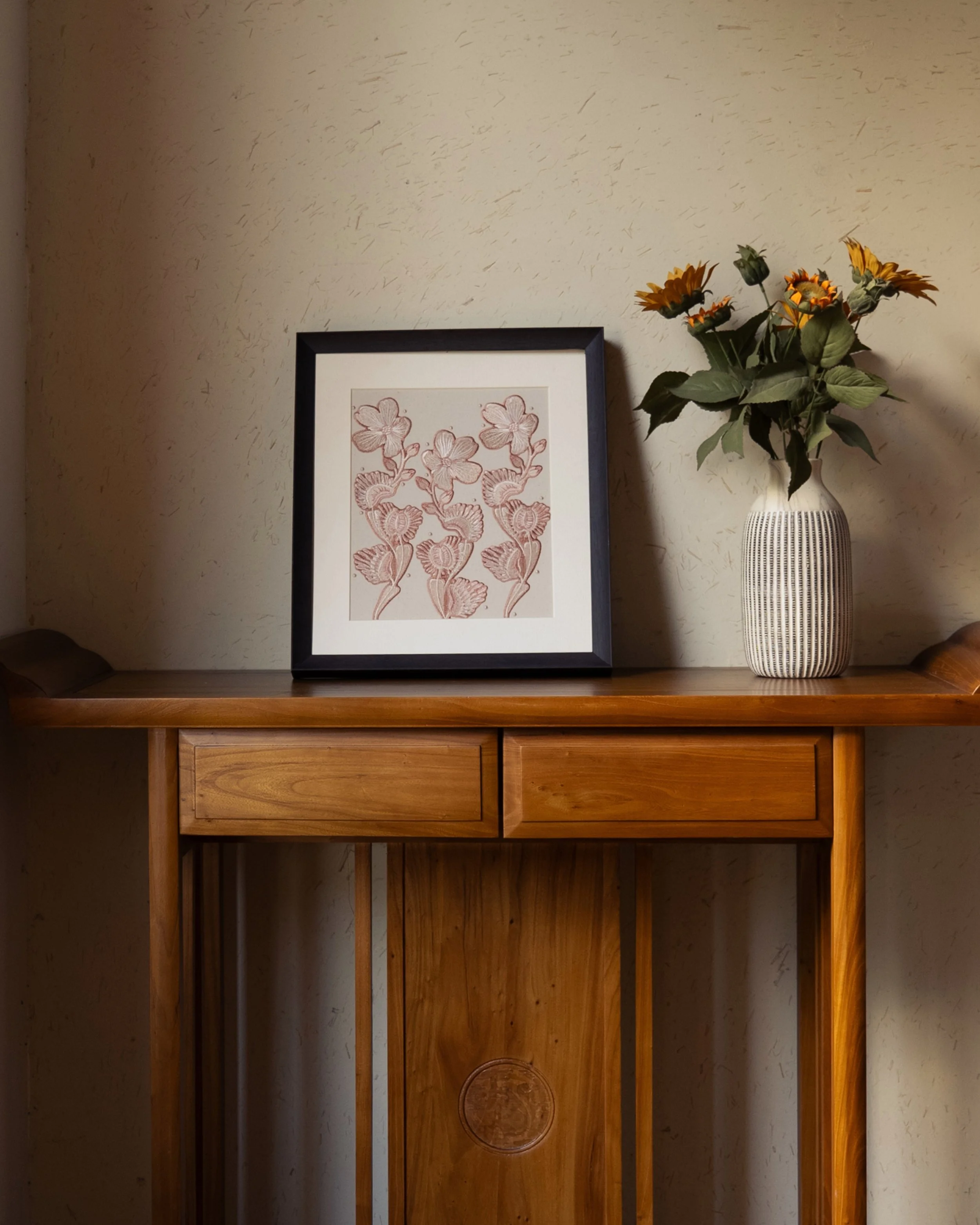
The Dionaea Art holds its form in soft threadwork—subtle, grounded, and quietly expressive against warm, textured walls.
Translating Form Through Embroidery
The embroidery follows the structure of the plant rather than softening it.
Clean stitching defines the edges of each leaf so that the opening and closing shapes remain clear, while layered threads create subtle depth across the surface. As light shifts throughout the day, different parts of the motif become more or less visible, giving the piece a quiet sense of variation.
There is also a slight change in texture, with certain areas raised just enough to introduce dimension without making the embroidery feel heavy.
The result is controlled rather than decorative.
It reads as a structured botanical form translated into textile, instead of a softened illustration.
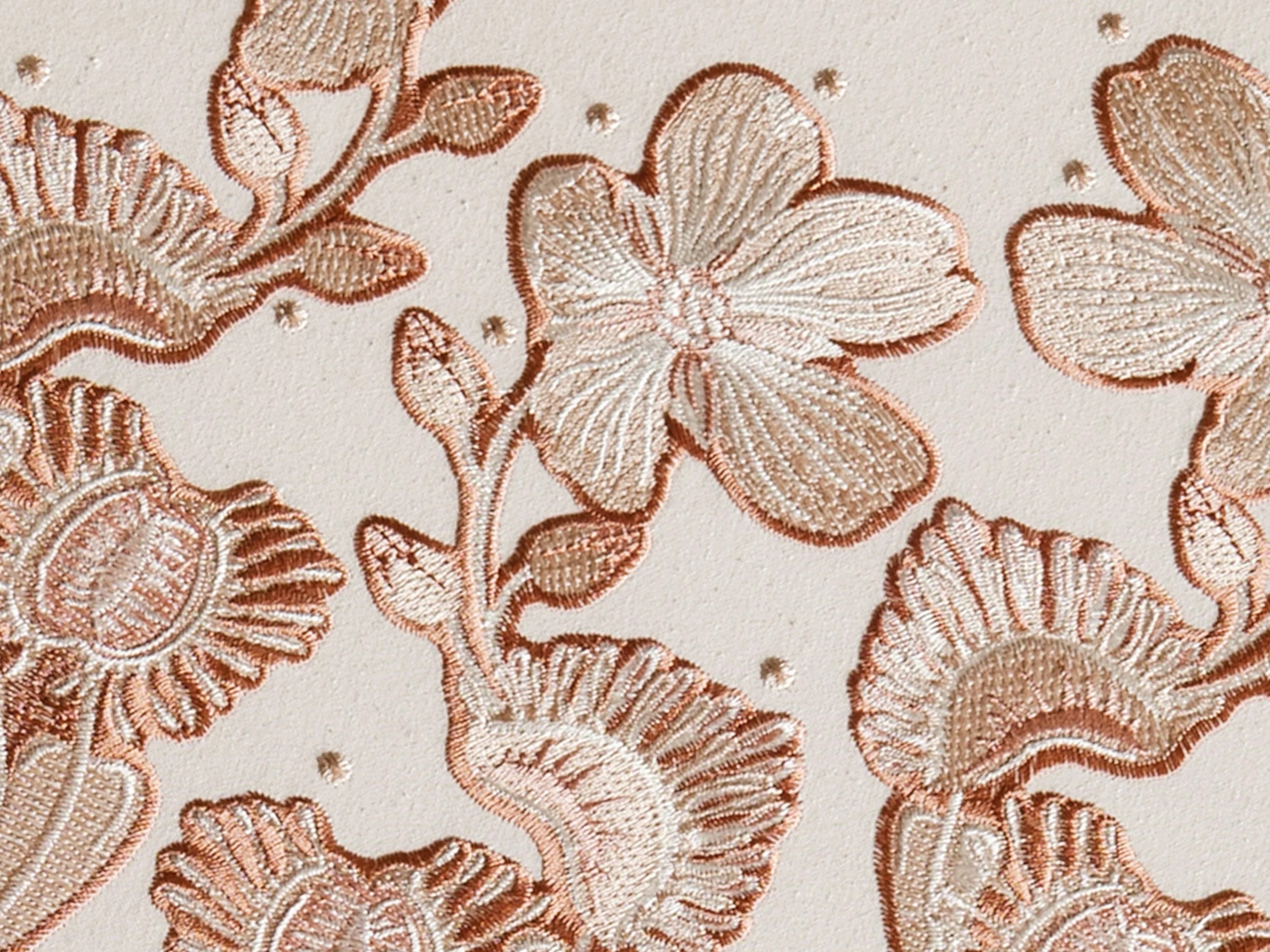
Close-up of Dionaea (Venus flytrap) embroidery showing layered stitching and subtle texture in botanical textile design.
From Motif to Object: Expressions of the Dionaea Design
Across different objects, the Dionaea motif shifts in scale and presence.
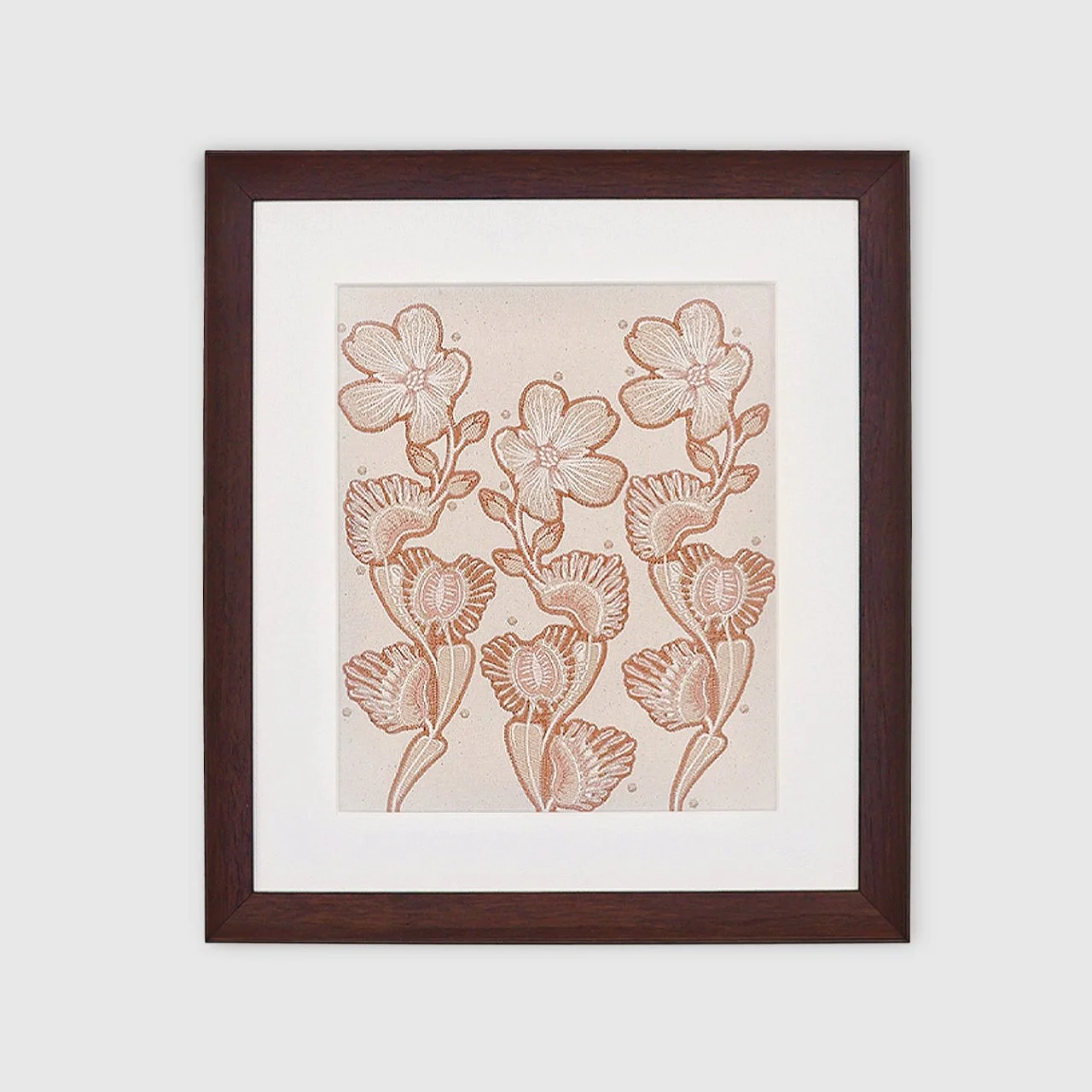
As textile wall art, it appears in a more complete form, with rows of shapes unfolding in a quiet rhythm that balances botanical softness with structural precision.
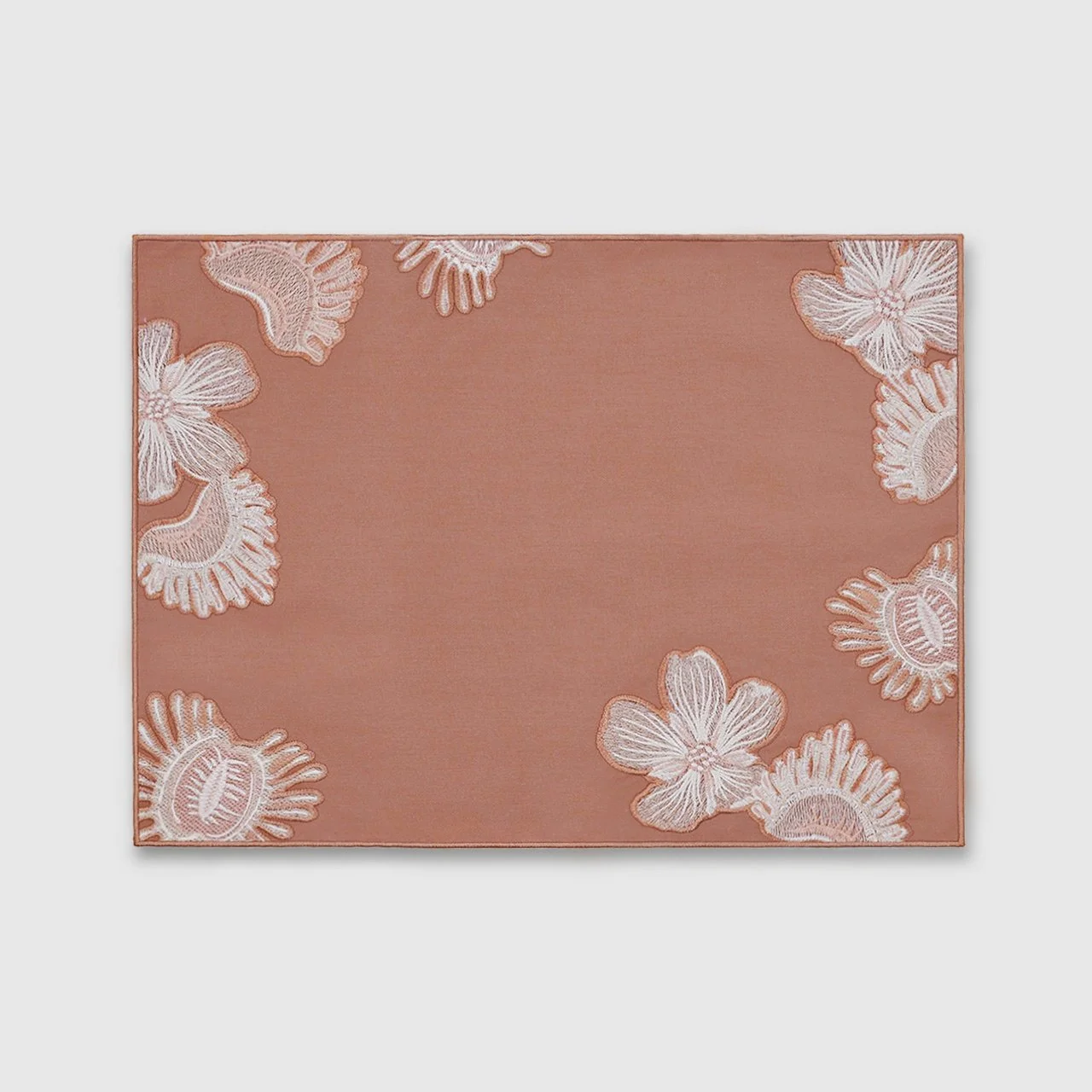
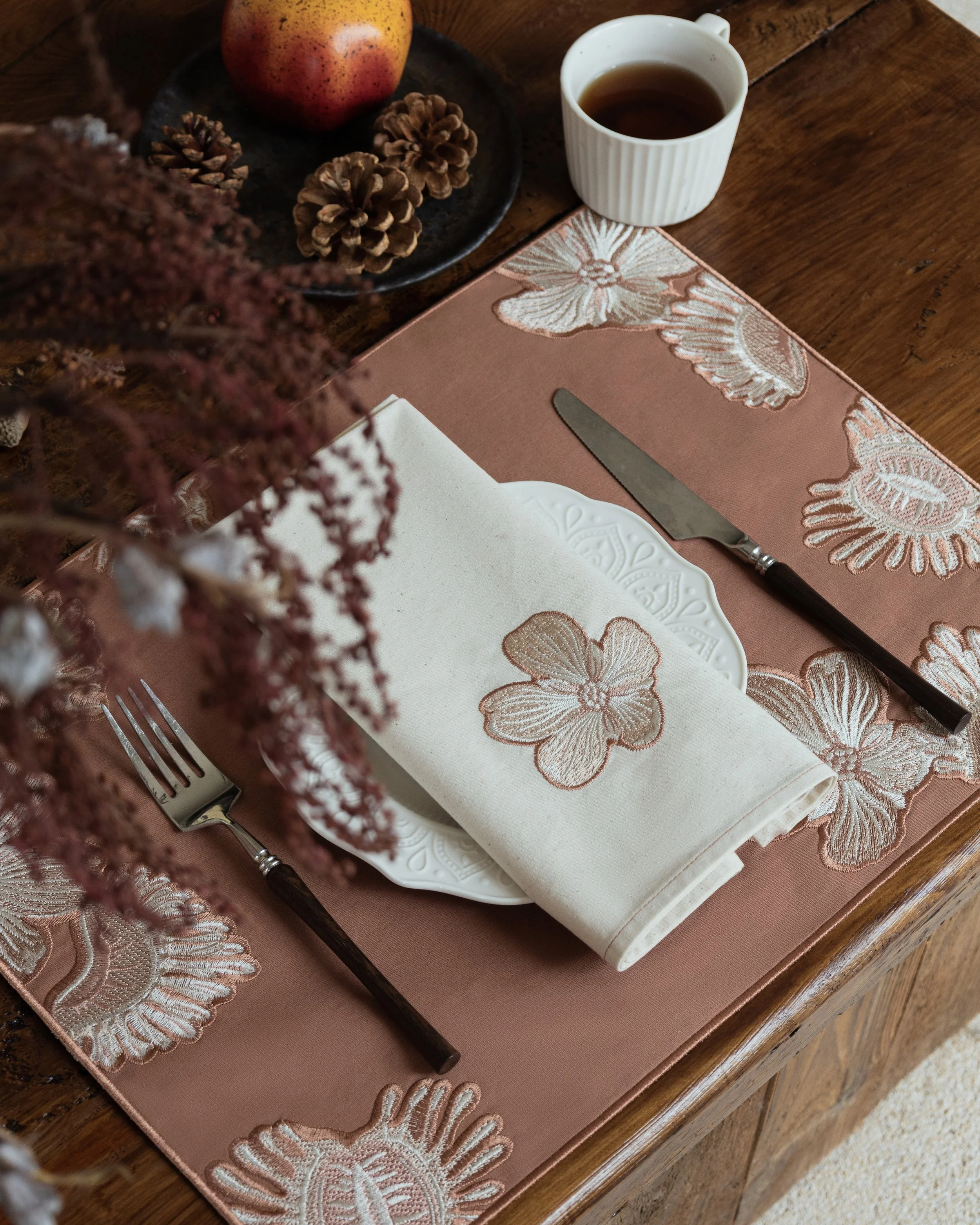
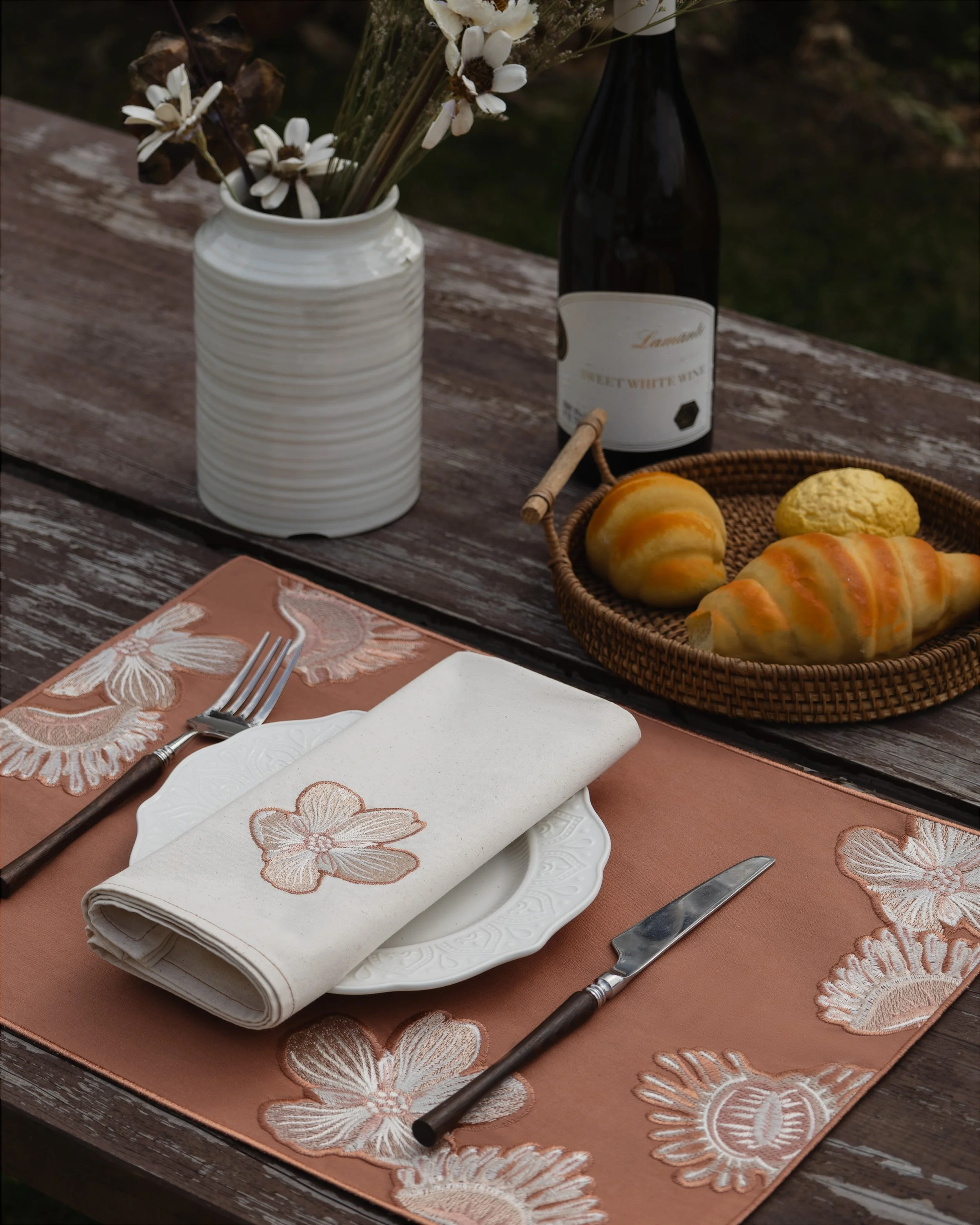
On the embroidered placemats, the composition becomes more distributed, with embroidered forms placed along the edges to introduce a subtle sense of order without overwhelming the table.
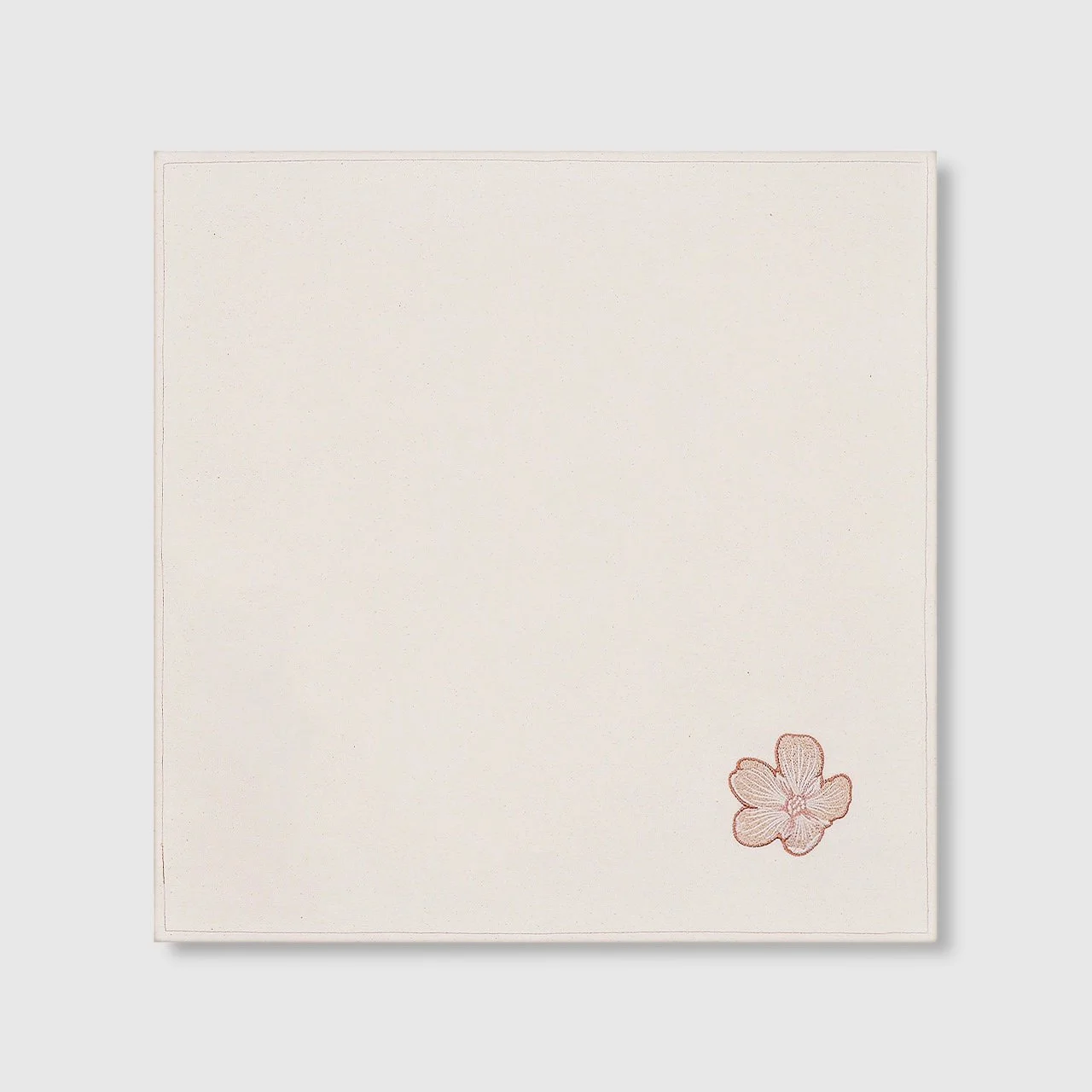
On the embroidered dinner napkins, the motif is reduced to a single, controlled detail, appearing only in moments of use and adding a restrained point of focus.
Together, these variations are not simply different products, but different ways of experiencing the same design—moving from full composition to surface rhythm to focused detail, while maintaining a consistent visual language throughout.
How It Works in Daily Life
The intention of the collection is not to create a strong focal point, but to integrate into everyday use.
The embroidery is noticed in passing—while setting a table, adjusting a napkin, or moving through a space. These moments are brief, but they repeat over time, which allows the design to feel present without being dominant.
Light also affects how the pieces are perceived. In natural light, the texture and structure are more defined, while in softer indoor settings, the embroidery becomes quieter and less pronounced.
Because of this, the pieces adapt to their surroundings rather than standing apart from them. This is what allows them to function as nature-inspired home decor instead of purely decorative objects.
A More Defined Approach to Botanical Design
Traditional floral patterns are often used to soften a space.
The Venus flytrap introduces something slightly different by adding definition rather than diffusion. It does not fully blend into the background, but it also does not dominate the environment.
Instead, it sits in between—visible, but controlled.
This balance makes it easier to integrate into different interiors without relying on a specific style, while still maintaining a clear visual identity.
Rather than decorating a space, it sharpens it slightly.
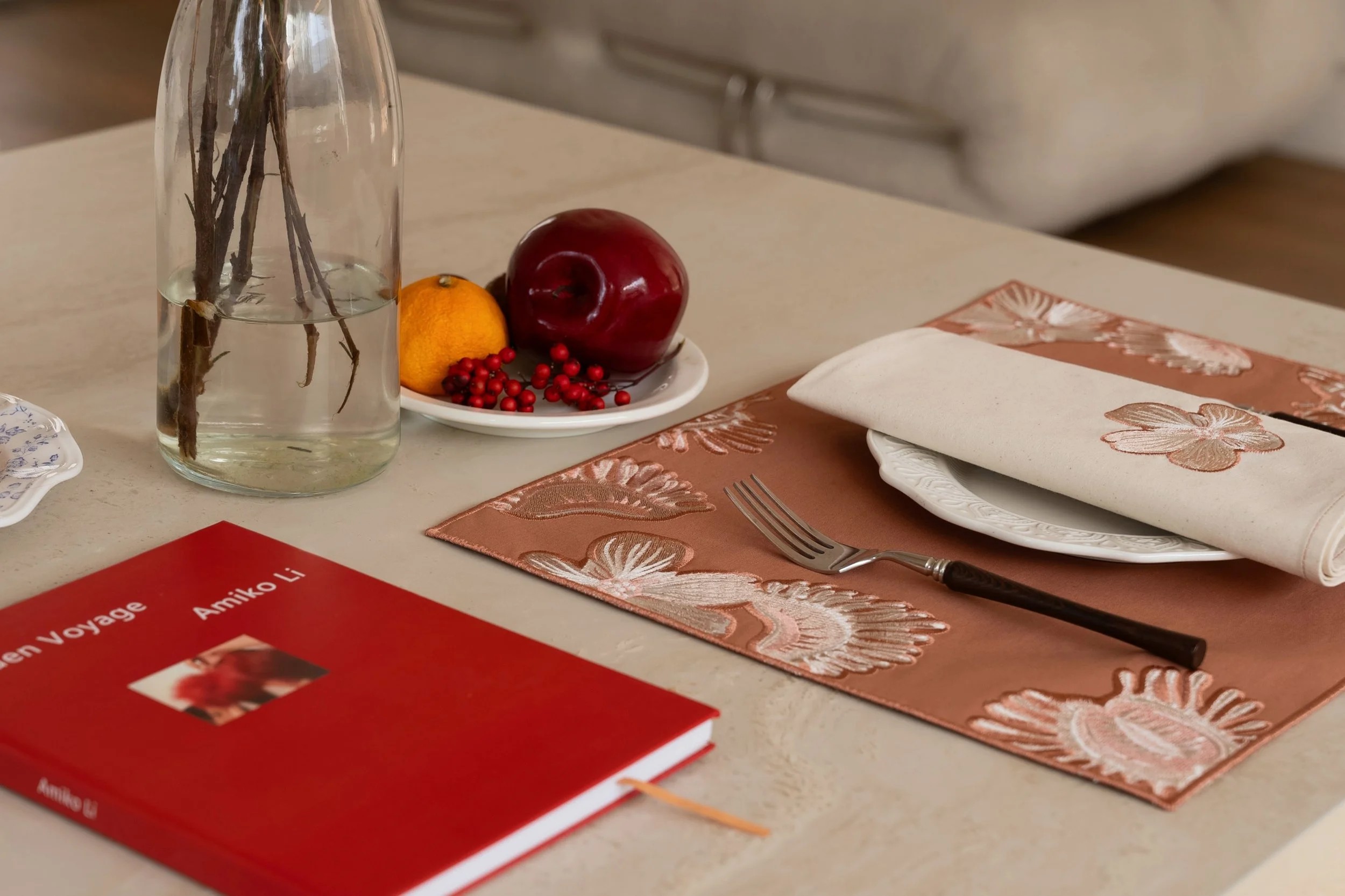
A warm, structured table setting featuring Dionaea embroidery, where botanical forms meet everyday dining.
Living with Botanical Embroidery
Over time, the same motif appears in different places—a table setting, a wall, a small detail in daily use.
Individually, these moments are subtle. Together, they create consistency.
This is where the design becomes effective. It no longer needs to be actively noticed, because it becomes part of the environment through repetition.
The embroidery does not try to stand out.
It stays, and that is enough.
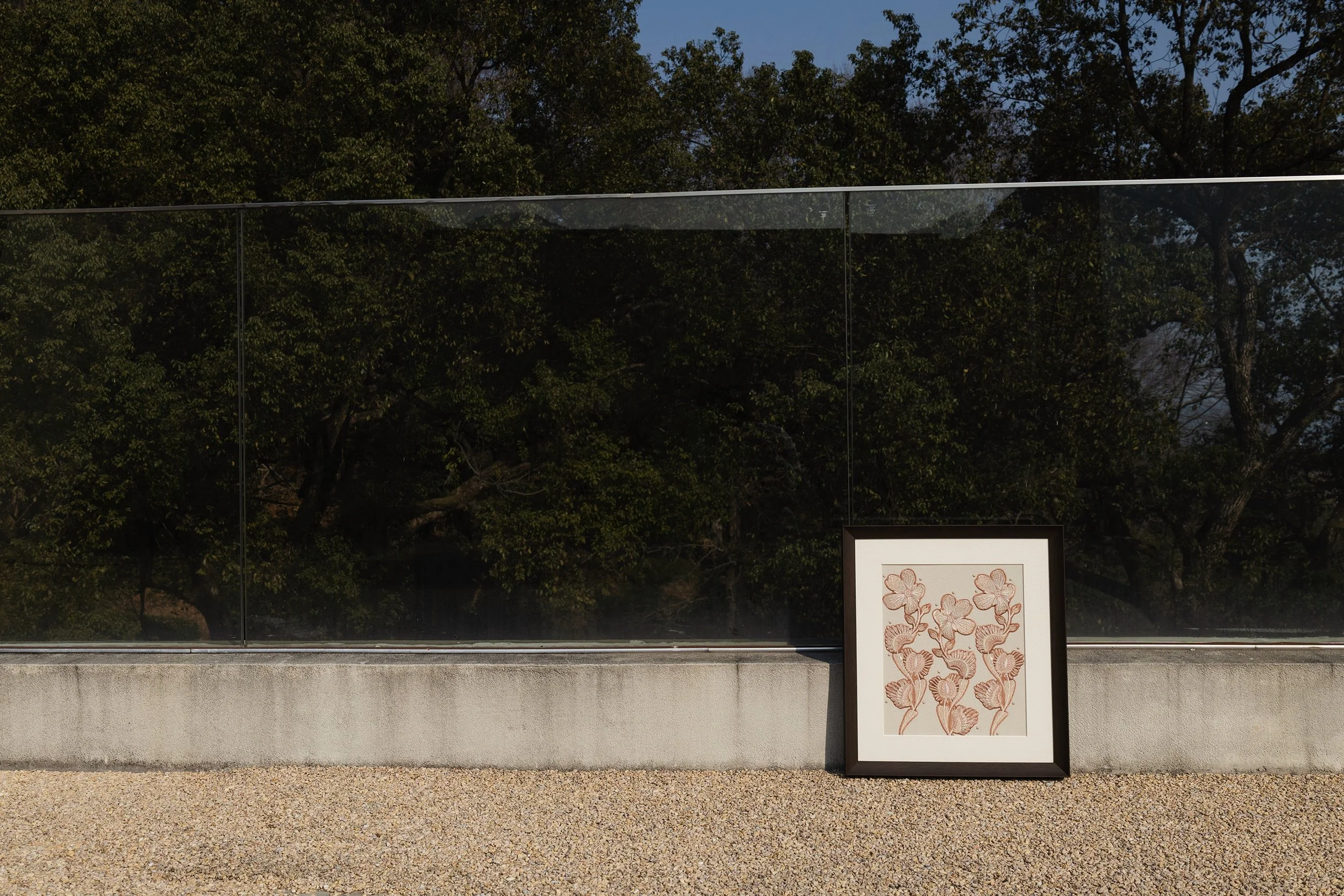
Dionaea embroidery artwork placed in a quiet outdoor setting, where botanical form meets natural light and architectural space.
Discover the Dionaea Collection
> Dionaea Embroidered wall art
> Dionaea Embroidered placemats
Designed for everyday use, each piece brings botanical embroidery into the home in a way that feels structured, natural, and easy to live with.